Reviewed · GUIDED
Private Guided Winter Mountaineering Experience in the Cairngorms
Frozen cliffs, rope, and calm instruction.
This private Cairngorms winter mountaineering day is interesting because you get a properly guided winter day, not a walk with a nice view. You start with a chat about conditions and safety, and you learn how your guide thinks about risk, with a guide style similar to Sam who is praised for ongoing risk checks and avalanche thinking. I also love the Cairngorms National Park setting, plus the way the day mixes movement on snow with real climbing fundamentals, all while staying focused on safety and technique.
The best part for me is the hands-on coaching once you’re moving on rock and ice. You get fitted with a harness and helmet, then attached by rope, with crampons and ice axes used with clear instruction. Guides are also credited with teaching skills step by step, from seconding to leading, and snapping epic photos as you go. You’ll enjoy the sense that you are working on skills, not just doing a one-off activity.
One possible drawback is that you need to show up ready for winter. You’ll need warm clothing, hat, gloves, waterproof layers, and winter mountain boots are required, plus the day depends on suitable conditions, so it may not run the same way if weather turns. If you show up underdressed or with the wrong boots, the whole experience gets harder than it should.
In This Review
- Key things that make this winter climb work
- Meeting in Aviemore at 8:30, and getting sorted fast
- The Cairngorms National Park approach walk, with crampons when needed
- Climbing below your route, harness to photos
- Teaching focus: seconding, leading, and avalanche thinking
- What’s provided vs what you must pack
- Price and logistics: private guiding value in one day
- Should you book this Cairngorms winter mountaineering day?
- FAQ
- How long is the private guided winter mountaineering experience in the Cairngorms?
- Where does the tour start and end?
- What time does the experience begin?
- Is pickup available?
- Is this a private tour?
- What gear is included?
- What do I need to bring?
- Do I need winter boots?
- What fitness level is required?
- What happens if the weather is poor?
- Is the experience offered in English?
Key things that make this winter climb work
- Qualified winter guiding and real risk management from start to finish, not just a quick safety talk.
- A gear plan that starts with crampons and ice axes when the approach calls for it.
- Rope work taught in action, with a guide leading and securing above you.
- Included emergency readiness, with an emergency shelter and first aid kit part of the day.
- Technique coaching you can feel, including progression of climbing skills like seconding and leading.
- Private-group focus with transport arranged and photos taken for you.
Meeting in Aviemore at 8:30, and getting sorted fast
This is a one day, private winter mountaineering experience based in Aviemore, starting at 8:30 am. You meet at the Tiso Aviemore Outdoor Experience, Unit 1, Retail Park, Santa Claus Drive, Aviemore PH22 1AF. I like this setup because you can get moving early, before the day turns into a long afternoon of waiting around.
The morning begins with a discussion with your fully qualified winter mountaineering guide. They’ll go over what to expect and answer questions, which matters in winter because your comfort level and your understanding of the plan affect everything else. Even if you already climb, it is still worth paying attention, because guide feedback can be the difference between feeling tense and feeling in control.
Then you get a short drive before heading into the Cairngorms on foot. If your group is small, pickup is offered free, and for larger groups they help you organize transport. That kind of practical support is part of the value here: fewer logistics headaches, more time focused on the mountains.
You should also plan around the physical level. The experience is listed for people with moderate physical fitness. That doesn’t mean you need to be an athlete, but you do need to be comfortable walking in winter conditions and using winter gear without freezing your brain along the way. The guide will set the pace, but your body still has to do its part.
Finally, the day is in English, confirmation is sent within 48 hours of booking (subject to availability), and you’ll use a mobile ticket. It is near public transportation too, which helps if you are not driving.
What Aviemore keeps behind the bar
- Edinburgh: Bamburgh, Northumberland & Alnwick Winter Adventure★ 5.0 · 16 reviews
The Cairngorms National Park approach walk, with crampons when needed
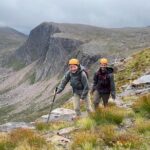
Once you’re in the Cairngorms, the experience shifts from warm layers and parking lots into snow travel. Your approach walk usually takes around one hour, and sometimes it includes using crampons and an ice axe. The key point is that your guide tells you when and how, and they teach safe use.
I find that this approach section is where you learn the most basic winter priorities. You’re not just walking on snow, you’re learning how to move efficiently in traction, how to place steps carefully, and how to keep your balance when the ground changes. Winter mountaineering has a way of turning small mistakes into big issues, so training your footwork early is smart.
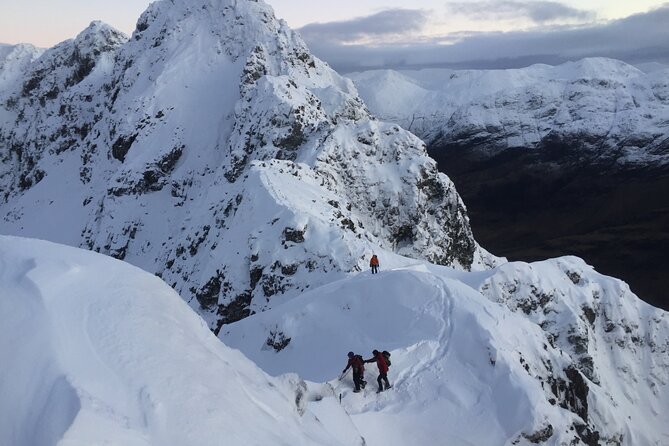
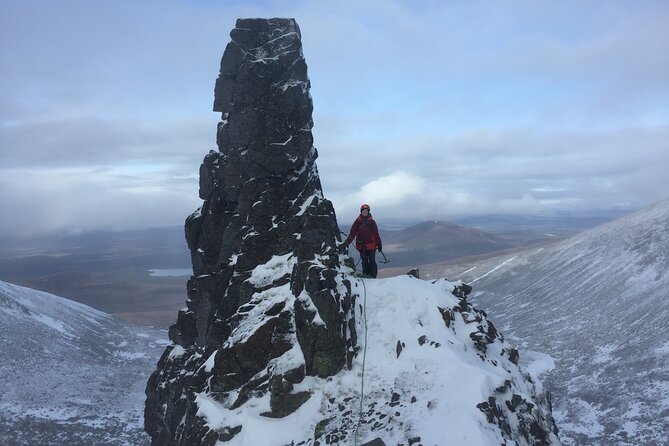
On the way in, you’ll see climbers on frozen cliffs around you and snow topped winter mountains stretching into the distance. That sight is more than decoration. It gives you context for what you’re about to do. You’re not going to a random training hillside. You’re going into a real mountaineering area where conditions can change fast.
One practical note: this part of the day can feel longer if you are not dressed correctly. Warm clothing, a hat, gloves, and waterproof layers aren’t optional extras here. They are how you keep your hands and feet functional so you can focus on learning. If your fingers are numb, every skill becomes harder.
Also remember: this activity depends on weather. If conditions are poor, it can be cancelled and you’ll be offered a different date or a full refund. That’s a reasonable rule for a winter climbing day, where safety depends on real conditions, not wishful thinking.
Climbing below your route, harness to photos
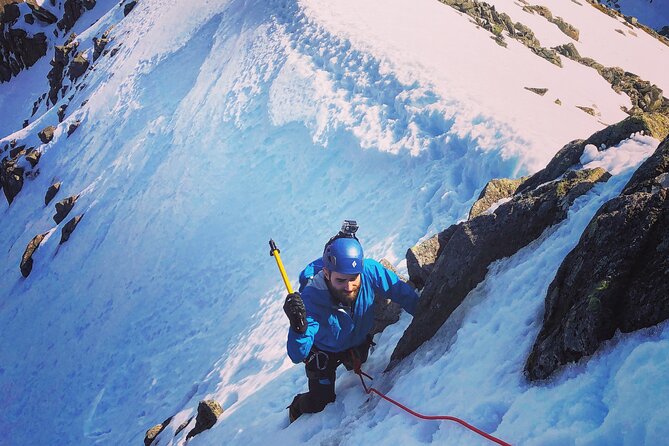
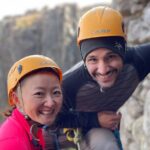
When you arrive below your climb, the day becomes very physical and very specific. You’re fitted with a harness and helmet, and you’re attached to your guide by climbing rope. This is the moment where the experience transitions from hiking to climbing, and it can also be the moment where nervous energy turns into focus.
With crampons on and ice axes deployed, your guide leads the route ahead and secures your rope above you. In plain terms, you’re learning in a system built for safety and control. You’re not wandering onto a route and hoping for the best. You’re moving inside a rope setup designed to manage risk, with the guide making the decisions at the sharp end of the climbing.
Guides are also described as calm and encouraging. They keep you safe, improve your technique, and help you understand what to do with hands, feet, and body position. The technical details of winter climbing are the kind of thing you can read about for years, but you only really lock them in when someone shows you what good looks like on the ice and explains why.
And yes, you get photos. Having your guide take pictures during the climb is more useful than it sounds. Winter climbing is busy. You are managing traction, rope, and breathing. You don’t have spare attention to stop and document the day. Photos let you remember the route and your progress without breaking your concentration.
The day ends back at the meeting point. That means you can plan your evening without a complicated itinerary. It’s a clean, one day format designed for learning and safe climbing in winter conditions.
Teaching focus: seconding, leading, and avalanche thinking
Here’s what stands out most from the guide style associated with this kind of experience: teaching is not an afterthought. You are guided on technique and decision making, not just moved from place to place.
Start of day coaching often includes matching the plan to your objectives. Some climbers are refreshing winter skills, others are working up to more advanced climbing, and the guide adjusts accordingly. That matters, because winter climbing skill levels vary hugely from person to person, even when people look fit on the outside.
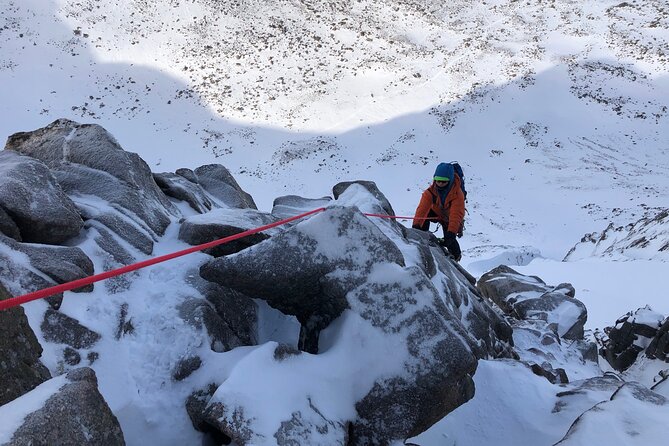
In the rope system, you’ll likely practice fundamentals that ladder up to bigger goals. Reviews linked to this guiding style mention learning more in one day than in a week elsewhere, with instruction that can include seconding and progressing toward leading techniques. Even if you never aim to lead independently, understanding how to move and communicate inside the system makes you safer and more confident.
Another strong theme is risk thinking. People specifically call out that the guide continuously assesses risk throughout the day, including avalanche assessment. Even if you are a beginner, you’ll benefit from learning how a professional reads the mountain: snow, weather shifts, terrain, and where danger could build.
This is where I think the private format really pays off. You get attention tied to your needs. You do not have to guess what you did wrong while watching three other groups go by.
So you’re not just collecting a winter badge. You’re leaving with sharper technique and a better mental model for how to stay safe, which is the real souvenir.
A second dram’s worth in Aviemore:
- Private Guided Mountain Walking Experience in the Cairngorms
★ 5.0 · 11 reviews - Private Guided Rock Climbing Experience in the Cairngorms
★ 5.0 · 6 reviews - Hiking Adventure to Ben Macdui Scotland
★ 5.0 · 6 reviews
What’s provided vs what you must pack
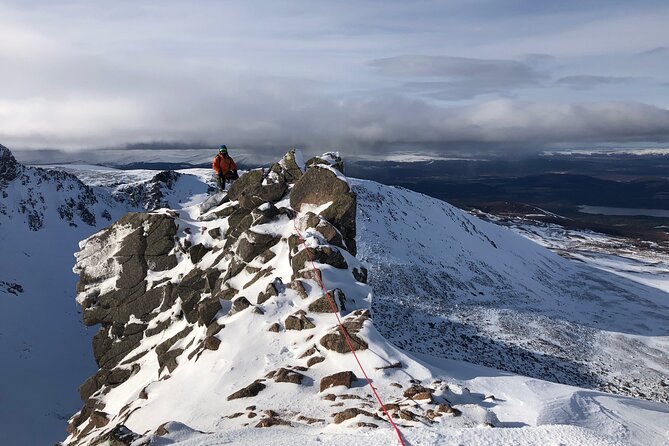
This is a gear-supported experience, but it’s still on you to show up properly dressed.
Included gear and support:
- Qualified Winter Mountaineering Instructor
- Ice axes and crampons
- Helmet and harness
- Climbing equipment
- Emergency shelter
- First aid kit
- Private transportation
- Photos of your day
What you must bring:
- Warm clothing
- Hat and gloves
- Waterproof layers
- Lunch (you provide your own)
Boots note:
- Winter mountain boots are required.
- They can help you hire these locally.
I like this mix because it keeps you from worrying about finding the right climbing kit. You can focus on dressing well and choosing boots that work. If you’re thinking about hiring boots locally, do it early enough that you have time to break them in a bit. The worst time to discover your boots pinch is when you are a half hour from the climb and your toes are already complaining.
Also, because the day can involve crampons and ice axe use during the approach, your outerwear needs to handle snow, wind, and wet conditions. Waterproof layers are not just for comfort. They protect your ability to move with control.
Lunch being on you is normal, but in winter it becomes more about fuel and hydration than food as a treat. Keep it simple. Eat early enough that you are not starting the hardest climbing portion with low energy.
Price and logistics: private guiding value in one day
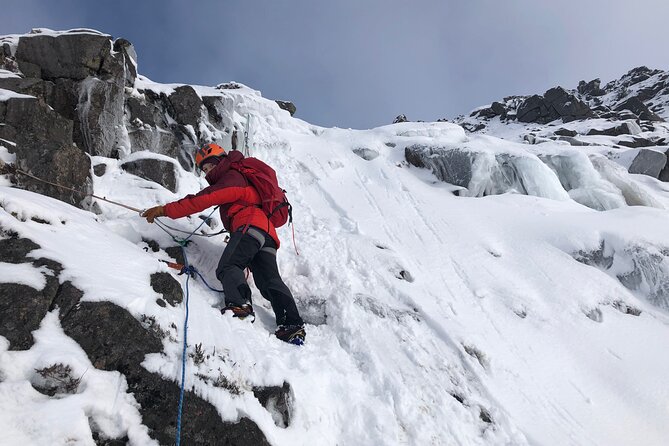
The price is $238.66 per person for an approx one day experience. That price can look steep until you break down what you’re actually getting.
You are paying for:
- A qualified winter mountaineering guide running the whole day
- Instruction and risk management during both the approach and the climb
- Core technical gear like crampons, ice axes, harness, and helmet
- Private transportation
- Safety gear like emergency shelter and a first aid kit
- Photos so you do not lose your attention to your phone
That’s a lot of operational value packed into a single day. Winter climbing days fail when they are chaotic, underplanned, or gear-light. This format is built to avoid that. Even the private-group element matters. Your learning time is not diluted by having to wait your turn while other people get coached.
There’s also a bit of flexibility in pickup. Small groups get free pickup, while larger groups have help organizing transport. That’s a practical touch, especially in rural areas where timing can get annoying.
If you are comparing value, think in terms of what costs you normally would pay separately: professional guiding, safety coverage, transport, and gear. Here, many of those pieces are bundled.
One thing to keep in mind is that cancellation due to poor weather is handled with either a different date or a full refund. If the minimum traveler count is not met, you’ll also be offered another date or full refund. That protects you from paying for a day that cannot happen safely.
Should you book this Cairngorms winter mountaineering day?
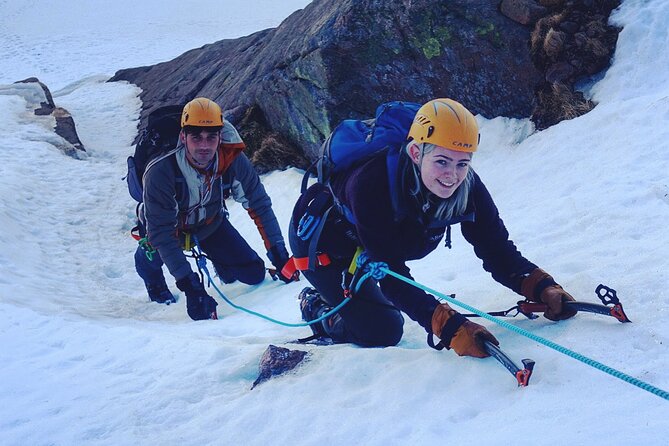
You should book if you want a guided winter climbing day in Scotland where safety and technique are treated as serious. This is a strong fit if you:
- Want hands-on instruction with rope systems and winter movement
- Appreciate a guide who pays attention to risk continuously
- Like the idea of a private day where your objectives can shape the plan
- Are ready to dress for the cold and bring your own lunch
You might want to rethink it if:
- You are not ready to meet the winter clothing requirements, including warm layers, waterproofs, gloves, and hat
- You do not have or cannot arrange winter mountain boots
- You are looking for a casual, sightseeing only experience. This is mountaineering, so you should expect real effort and real winter conditions.
If you want a day that turns snow travel into actual climbing skill, this is the kind of experience that can make winter feel less mysterious and more manageable.
FAQ
How long is the private guided winter mountaineering experience in the Cairngorms?
It lasts about 1 day, with an approach walk that usually takes around one hour.
Where does the tour start and end?
You meet at Tiso Aviemore Outdoor Experience, Unit 1, Retail Park, Santa Claus Drive, Aviemore PH22 1AF, UK. The activity ends back at the meeting point.
What time does the experience begin?
The start time is 8:30 am.
Is pickup available?
Pickup is offered. The details say they can pick up small groups for free or assist with organizing transport for larger groups.
Is this a private tour?
Yes. It is a private tour/activity, and only your group participates.
What gear is included?
The experience includes a qualified winter mountaineering instructor, ice axes and crampons, helmet and harness, climbing equipment, an emergency shelter, and a first aid kit. Photos are also included.
What do I need to bring?
You need warm clothing, a hat, gloves, and waterproof layers. You should also bring lunch for the day.
Do I need winter boots?
Yes, winter mountain boots are required. The team can assist with hiring them locally.
What fitness level is required?
The information provided says travelers should have a moderate physical fitness level.
What happens if the weather is poor?
This experience requires good weather. If it is canceled due to poor weather, you will be offered a different date or a full refund.
Is the experience offered in English?
Yes, it is offered in English.
The newest pours out of Aviemore
Guided, compared.

Edinburgh Castle: Guided Walking Tour with Entry Ticket
Read our review →
Edinburgh Castle Guided Walking Tour in English
Read our review →
Original Harry Potter Locations Tour in Edinburgh : Guided Tour
Read our review →
Loch Ness, Glencoe & the Highlands Guided Day Tour from Edinburgh
Read our review →
The Scotch Whisky Experience Guided Whisky Tour – An Introduction to Whisky
Read our review →
Glasgow City Centre Walking Tour with Local Guide
Read our review →