
Reviewed · CYCLING TOURS
The Essential Bike and E Bike Tour of Glasgow Center and Beyond
Glasgow clicks fast on an e-bike. This 3-hour loop takes you through standout corners of the city, from the River Clyde bridges to the Necropolis, without making you feel like you’re sprinting for views. I especially like how the route keeps shifting themes, so you go from industry to education to cathedral-era Glasgow in one smooth morning.
Two things I really like are the e-bikes, which handle the harder bits with less effort, and Stuart’s storytelling, which turns landmarks into places with context. The one thing to consider is that the ride assumes you can comfortably ride a bicycle and that the tour depends on good weather, since it’s outdoors.
In This Review
- Key highlights you will notice
- Why this Glasgow e-bike tour works so well in a short morning
- Price and what you get for $69.93
- Meeting at 38 Howard Street and rolling through Glasgow’s main corridors
- River Clyde bridges and historic landmarks: the start that sets the tone
- Finnieston Crane, the Armadillo, and Glasgow’s industrial legacy
- Tall Ship Glenlee by the Transport Museum: seeing shipbuilding in a physical way
- University of Glasgow: one stop that makes education feel global
- Kelvingrove Park and the red-stone museum look
- Kelvin River Path: the calm stretch that makes the city feel bigger
- Firhill Stadium and the Forth and Clyde Canal viewpoints
- Glasgow Cathedral, the Royal Infirmary, and the oldest city layer
- The Necropolis: why this City of the Dead still feels alive
- People’s Palace and Winter Gardens: the soft landing finish
- The real star: Stuart’s approach to safety, stories, and questions
- Who should book this tour, and who might want to choose differently
- Practical tips so your morning feels smooth
- Should you book this Glasgow Center and Beyond e-bike tour?
- FAQ
- How long is the Glasgow e-bike tour?
- What is the meeting point for the tour?
- What time does the tour start?
- Is the tour offered in English?
- Do I get a mobile ticket?
- How physically demanding is it?
- How many people are on the tour?
- What major sights are included?
- Is there an admission cost at the stops?
- What happens if weather is poor?
Key highlights you will notice
- A tight 3-hour route that still covers major neighborhoods and landmarks
- Stuart’s local stories that make the Clyde, the cathedral area, and the Necropolis click
- E-bike help on steeper sections, with lots of riding that feels flat or downhill
- Iconic stops with free admission listed along the way
- Small group size with a maximum of 8 riders
- Photo support after the tour, plus dinner suggestions to keep your day rolling
Why this Glasgow e-bike tour works so well in a short morning
If you only have a small window in Glasgow, this is one of the better ways to get your bearings fast. The route is built like a guided map of the city, not a random string of photo stops. You start with the River Clyde, then fan out through industry, universities, parks, and the city’s oldest core, before easing back to the start.
What makes it feel special is how often you are moving between different Glasgow moods. One minute you are beside the water and big bridge shapes. Next you are under park trees. Then you are looking at historic stone buildings and, finally, into the quieter drama of the Necropolis. It’s a lot for about three hours, but the pacing stays manageable.
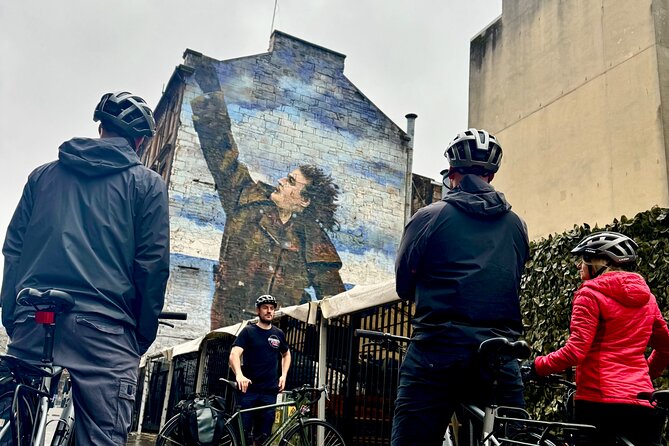
And the guide matters. Stuart stays focused on safety while still answering every question that pops up. The stories are specific, the route is logical, and you end with enough context to explore on your own later.
More gears saved for the braes:
- Glasgow Highlights Bike or Ebike Tour★ 5.0 · 134 reviews
- Glasgow City and Clyde Bridges Bike Tour★ 5.0 · 91 reviews
- Glasgow Private Bike Tour: Highlights & Hidden Gems★ 5.0 · 33 reviews
- Glasgow EBike and Whisky Distillery Tour!★ 5.0 · 10 reviews
Price and what you get for $69.93
At about $69.93 per person for roughly 3 hours, you are paying for three things: an e-bike, guided route planning, and an organized way to see many places without thinking about transport or logistics.
You also get a small group experience, with a maximum of 8 travelers. That is a big deal in a city like Glasgow, where it helps to have enough space to ride safely and to hear explanations while you stop. When a tour includes a guide who covers multiple themes and key landmarks, the value is not just the ride time. It is the way you understand what you’re looking at.
Another value point is that many of the stops are listed with free admission, which helps if you are trying to keep daily costs under control. Even if you never buy a ticket at the attractions, you still get the key views and the context.
Meeting at 38 Howard Street and rolling through Glasgow’s main corridors
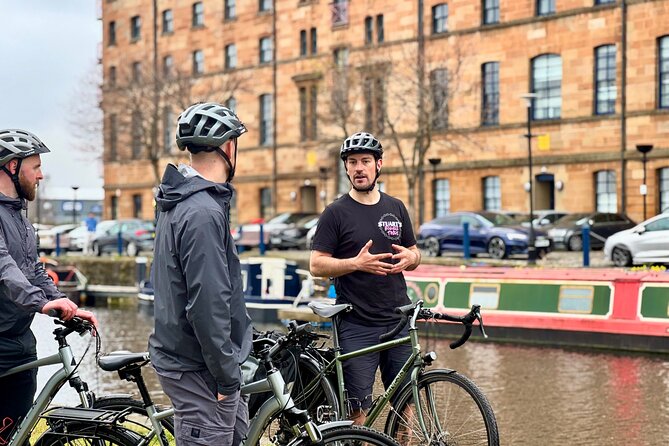
You meet at 38 Howard St, Glasgow G1 4AW, and the tour starts at 10:30 am. The ending is back at the meeting point, so there is no messy scramble to figure out where you finish.
The location is also convenient because it is near public transportation. That matters because it makes it easier to tie this into the rest of your day, whether you plan a museum stop afterward or you want time for lunch somewhere central.
Once you’re mounted, the ride follows a clear direction: out toward the Clyde and then northward through park and city-center highlights. It feels like you are being led on a guided loop, not herded from one corner to another.
River Clyde bridges and historic landmarks: the start that sets the tone
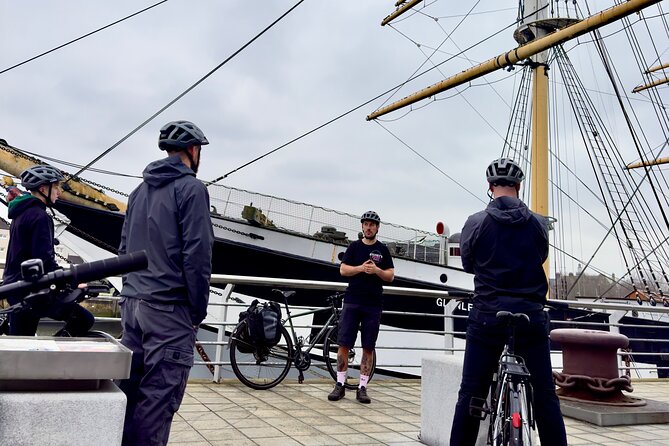
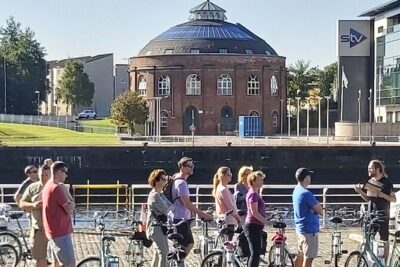
The tour kicks off along the River Clyde. This is a strong opener because the river explains a lot about Glasgow, fast. You get moving views of bridges and historic landmarks, so right away you understand that the city was shaped by water, trade, and shipbuilding.
This first segment is about getting oriented. You’re not stuck waiting. You are learning the layout by riding it, with plenty of chances to stop briefly, look around, and connect the scenery to the larger story.
Why I think this stop works: if you begin beside the water, the rest of the route feels more meaningful. When you later reach areas tied to industry and transport, it all starts to connect.
What Glasgow keeps behind the bar
- Edinburgh Sky to Sea Bike or E-Bike Tour with Transfer by TBC
★ 5.0 · 427 reviews - Edinburgh City Bike Tour – Choice of E-Bike or Manual
★ 5.0 · 241 reviews - Stunning Edinburgh E-bike Tour max 10 people small group
★ 4.5 · 38 reviews - ‘A wee pedal’s’ E-bike tour of Arthur’s Seat and beyond
★ 5.0 · 28 reviews
Finnieston Crane, the Armadillo, and Glasgow’s industrial legacy
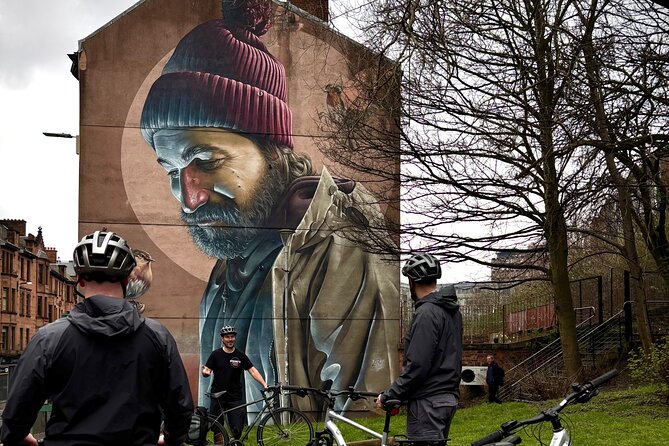
Next up is the Finnieston Crane. This stop is about industry, and not in a simplified, shiny way. You pay tribute to the industries that shaped Glasgow and the British Empire, including both the good and the bad. That balanced approach helps you avoid the easy version of history where everything is just positive or just tragic.
You also get sights that define modern Glasgow near this industrial past. The Armadillo and iconic Glasgow theatre are in the mix, so you see how a former industrial landscape coexists with arts and architecture today.
Practical note: this segment is short, so it’s ideal if you like quick bursts of context rather than long museum-style stops.
Tall Ship Glenlee by the Transport Museum: seeing shipbuilding in a physical way
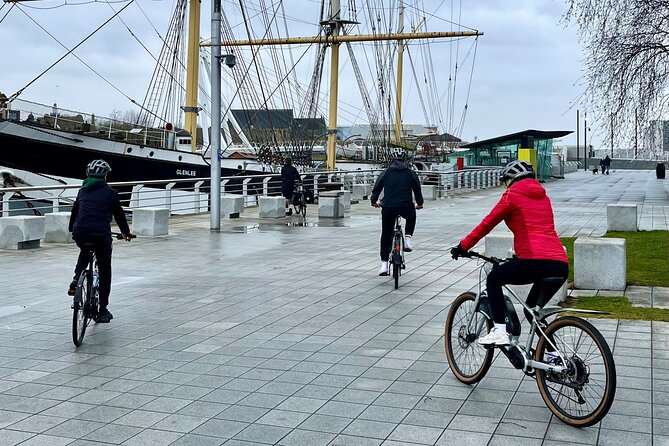
At the Tall Ship Glenlee, you stop outside the Glasgow Transport Museum area and focus on a refurbished sail ship tied to shipbuilding. The point here is not just the boat. It’s what the boat represents, Glasgow’s shipbuilding story and how the Clyde made the city world-famous.
If you care about how cities grow, this is the moment where the route stops being only scenic and starts becoming explanatory. You learn how shipbuilding influenced the economy and how that influence traveled outward beyond Scotland.
One thing to keep in mind: the stop is brief, so listen closely to what Stuart says. This is a location where a short explanation can give you a lot of understanding if you catch it.
University of Glasgow: one stop that makes education feel global
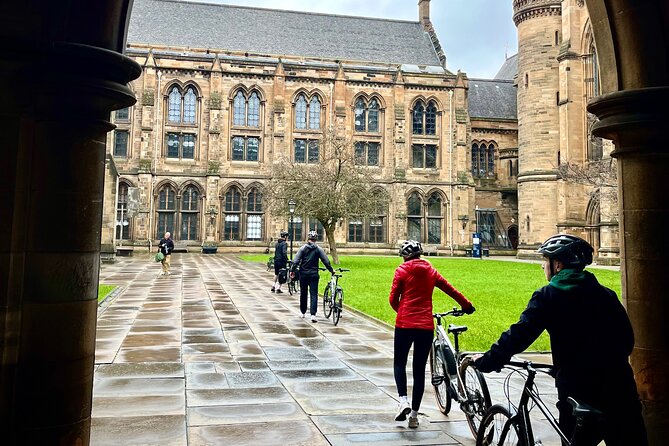
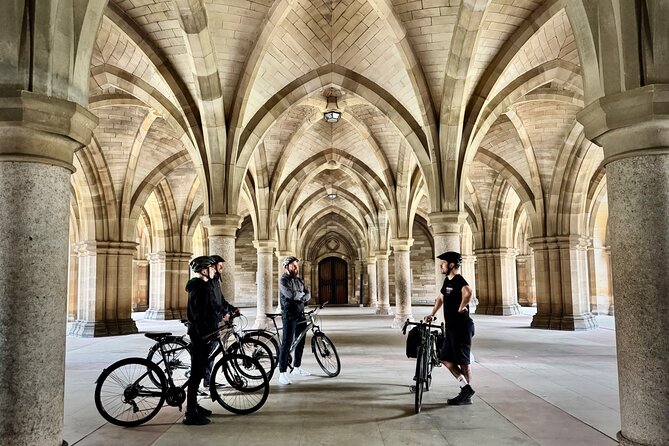
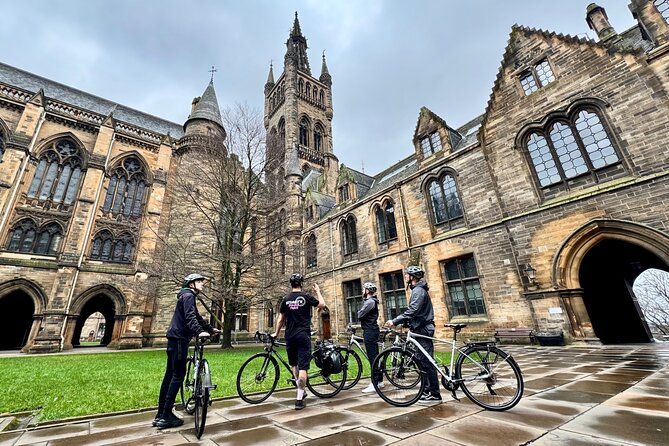
Then you reach the University of Glasgow, described as the second oldest university in Scotland. The big draw is getting to enter one of the most spectacular university buildings around, and then having the guide connect Scottish education to its impact beyond the local scene.
I like stops like this because they break the usual tour pattern of only focusing on castles, churches, and canals. Universities are part of the city’s engine, too. You see that Glasgow did not just build ships and factories. It also built ideas, institutions, and education pathways that spread.
If architecture is your thing, this stop is a highlight. If you’re more into culture than stonework, you still get something useful from the education perspective.
Kelvingrove Park and the red-stone museum look
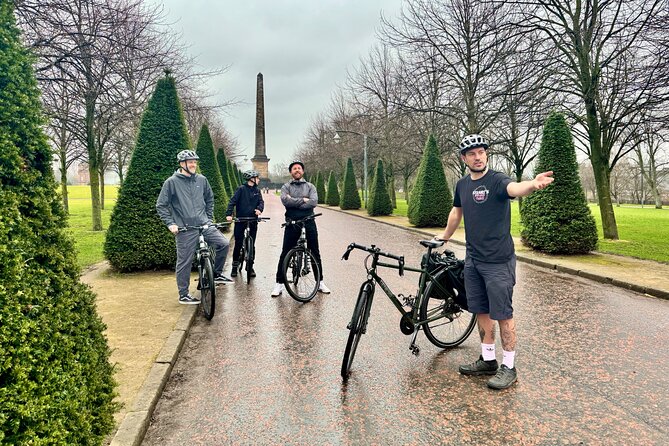
The ride then moves through Kelvingrove Park, which is one of Glasgow’s best loved parks. This is your outdoor breathing moment before you head deeper into the city core. The park setting also helps reset you physically, because you’ve been pedaling for a bit.
A key visual stop comes at the Kelvingrove Museum and Art Gallery, with its red stone look that reads instantly in the Glasgow skyline. You’re not just passing it. You’re getting oriented to why it is considered iconic.
The downside of a park stop is that it can feel like you are cycling through, not stopping. In this tour, the stop is long enough to see the museum exterior and enjoy the park atmosphere, while still keeping the overall pace smooth.
Kelvin River Path: the calm stretch that makes the city feel bigger
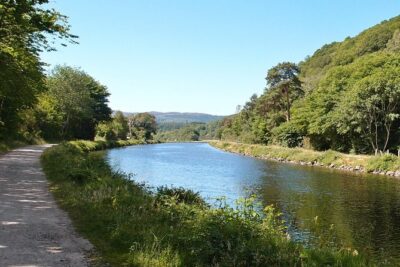
After the busier parts, you take the Kelvin River Path north. This is the oasis moment. You get leafy, quieter riding below the intensity of the city above.
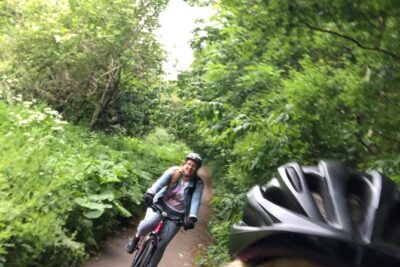
If you tend to get a little tired during city tours, this is where you’ll feel a relief. It is also where the ride becomes more pleasant in a sensory way, less traffic noise, more green edges, and a slower rhythm even when you keep pedaling.
This is also where the e-bike support often matters most. Even if the route is mostly manageable, any gentle incline becomes easier when the bike helps you out.
Firhill Stadium and the Forth and Clyde Canal viewpoints
Next you join the Forth and Clyde Canal area and take in vistas out across Glasgow to the south, including spires and tenements. This gives you a wider sense of the city’s layers and scale.
You also pass Firhill Stadium, home of Patrick Thistle Football Club. Since football is woven into Scottish identity, the tour’s inclusion here adds a very real local touch. It’s not just history, it’s how people still live and care today.
One practical point: stadium areas can have more activity around them depending on the day. The tour timing is in the morning, so the ride often feels straightforward, but keep your eyes up and follow the guide’s safety direction.
Glasgow Cathedral, the Royal Infirmary, and the oldest city layer
Now you hit the oldest part of Glasgow. You visit Glasgow Cathedral, plus nearby historic context including the Royal Infirmary and the Oldest House in Glasgow. Then you see the Necropolis, the City of the Dead, which leads nicely into the next stop.
This portion matters because it changes your sense of time. Earlier parts of the ride connect Glasgow to industry and education. Here, you see where the city’s identity began in the 6th century, and why that matters even if you’ve never studied local medieval history.
Stops like this work best when the guide connects buildings to what they meant for everyday life. Stuart’s approach, from what I’ve gathered, is exactly that. He mixes facts with stories and helps you read the shapes in front of you.
The Necropolis: why this City of the Dead still feels alive
The Necropolis is described as the City of the Dead, with resting places of over 50,000 Glasgow citizens. That scale is hard to picture until you are standing where the landscape of remembrance stretches outward.
I like this stop because it challenges you to see a cemetery as more than a somber place. It is a piece of city planning and community memory, and its location makes it part of the skyline and viewpoint system of the area.
This is also a good reminder that Glasgow is not only churches and parks. It also has long-form landscapes that show how people dealt with life, death, and legacy.
People’s Palace and Winter Gardens: the soft landing finish
For the closing stretch, you reach People’s Palace and Winter Gardens, described as Glasgow’s dear green place. You also see monuments around the area.
This is a smart end point because it gives you a gentle landing after cathedral-area gravity. The greenery and open feel makes it easier to transition back into normal sightseeing mode, like wandering for lunch or finding a museum nearby.
Even if you are not a garden person, Winter Gardens-style spaces tend to create a calm you can feel right away. Pair that with monuments and the day ends with both atmosphere and structure.
The real star: Stuart’s approach to safety, stories, and questions
Every strong bike tour depends on the guide, and Stuart stands out for a few practical reasons. First, he is prompt and professional. Second, he stays focused on safety, which is crucial when you are riding through city streets and around pedestrians.
Then there is the storytelling. The way Stuart shares Scottish history and Glasgow building context makes it easier to remember what you saw. It is not only facts, it is how he connects places into a narrative you can carry later.
A neat bonus is that Stuart takes pictures during the tour and sends them immediately afterward, along with dinner recommendations. That is the kind of small service that saves you effort and helps you keep your day moving, especially if you are not sure where to eat.
And yes, the e-bikes truly help. Even on a route that is mostly flat or downhill, there are usually a few spots where you can feel the grade. The e-bike support makes those moments manageable, so you do not burn out before the cathedral or the Necropolis.
Who should book this tour, and who might want to choose differently
This tour fits best if you want a guided overview of Glasgow without spending time figuring out routes. It also works well if you like history, architecture, and city neighborhoods, but you want them explained in a way that connects to the bigger city story.
You should book if:
- You can comfortably ride a bicycle and you have at least moderate physical fitness
- You want an organized route with short stops and clear explanations
- You appreciate a small group ride with safety as a priority
You might want to choose a different option if:
- You are not confident riding on roads or paths with other people nearby
- You are only available on days with uncertain weather, since good weather is required for the tour to run
Practical tips so your morning feels smooth
Bring what you need to be comfortable for a morning outdoors. Since the tour is weather dependent, wear layers and plan for changing conditions.
For the ride itself, treat the tour like a steady walk that happens to be on two wheels. Follow the guide’s pace at each stop, and ask questions when they come up. Stuart’s style seems built around answering everything you want to know.
If you get the e-bike, take a few moments to get used to it at the start so the assist feels natural. The e-bikes are described as easy to use, and you’ll likely appreciate that extra help on any steeper sections near the edges of the route.
Finally, keep your camera accessible. You will have multiple exterior views where a quick photo is worth it, especially around the Clyde bridges, the university buildings, and the cathedral area.
Should you book this Glasgow Center and Beyond e-bike tour?
I would book it if you want the best parts of Glasgow in a short time, with an easy effort level thanks to e-bikes and a guide who makes the city make sense. The route is structured, the stops are varied, and the small group size helps the whole experience stay comfortable.
Skip it only if you cannot ride a bicycle comfortably or if you are worried about weather ruining plans. When the day is dry and your body can handle a moderate bike ride, this tour delivers a lot of Glasgow in about three hours, plus the kind of local guidance that makes your next stops easier.
FAQ
How long is the Glasgow e-bike tour?
It runs for about 3 hours.
What is the meeting point for the tour?
You meet at 38 Howard St, Glasgow G1 4AW, UK.
What time does the tour start?
The start time is 10:30 am.
Is the tour offered in English?
Yes, it is offered in English.
Do I get a mobile ticket?
Yes, it includes a mobile ticket.
How physically demanding is it?
The tour calls for travelers with a moderate physical fitness level, and you must be able to ride a bicycle.
How many people are on the tour?
The tour has a maximum of 8 travelers.
What major sights are included?
You ride past or stop at the River Clyde, Finnieston Crane, The Tall Ship Glenlee, the University of Glasgow, Kelvingrove Park and the Kelvingrove Museum and Art Gallery area, the Kelvin River Path, Firhill Stadium, Glasgow Cathedral, the Necropolis, and People’s Palace and Winter Gardens.
Is there an admission cost at the stops?
The itinerary lists the stops with admission ticket free.
What happens if weather is poor?
The tour requires good weather. If it is canceled due to poor weather, you will be offered a different date or a full refund.
The newest pours out of Glasgow




Cycling Tours, compared.
Edinburgh Sky to Sea Bike or E-Bike Tour with Transfer by TBC
Read our review →
Edinburgh City Bike Tour – Choice of E-Bike or Manual
Read our review →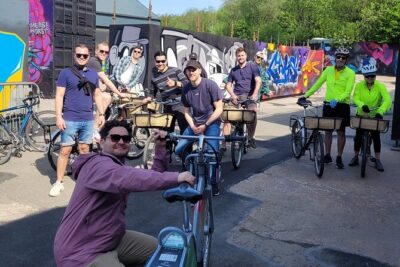
‘A Wee Pedal’s’ Award-Winning Circular Cycle Tour of Edinburgh!
Read our review →
Scottish Highlands Freedom Bike & E- Bike Tour with Transfers
Read our review →
‘A Wee Pedal’s’ Family Friendly Cycle Tour to Edinburgh’s Coast
Read our review →Browse the lists this tour appears in