
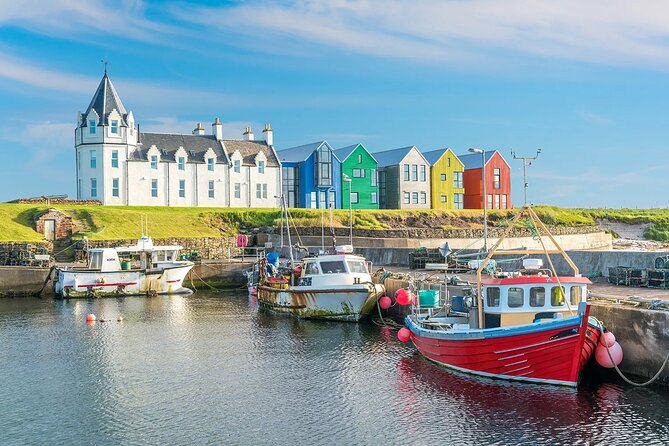
Reviewed · SCOTTISH HIGHLANDS DAY TOURS
Top Of The Highlands Tour: John O’ Groats, Caithness and More
Wild cliffs, big drama, and that far-north feeling. This tour stitches together John O’Groats and the Duncansby Stacks area, where you’re close to seabird colonies and the Pentland Firth’s wild mood. I like the mix of quick photo stops and longer, walkable viewpoints, plus the chance to see seals and seabirds depending on the season. One thing to keep in mind is that it is a long day with plenty of driving, and the optional castle visits add extra admission costs.
What makes it work well is the private format. I like that you get a local guide, a comfortable vehicle with air conditioning, and even small comforts like bottled water, snacks, and an umbrella. You’ll likely spend your time looking out the window as much as stepping out onto clifftops, which is ideal if you want a high-views day without planning your own route.
The day can change depending on departure point. If you’re going from Inverness, you may visit Dunrobin Castle; if you’re departing from Scrabster, you may visit the Castle of Mey only on specific days and months, with a replacement stop on closed days. If you’re planning around a specific castle, check timing carefully before you book.
In This Review
- Key things I’d circle before you go
- The far-north route you can actually do in one day
- John O’Groats: the signpost photo, coastal history, and wildlife odds
- Duncansby Stacks and Duncansby Head: where the North Sea makes the rules
- Wick in Caithness: fishing-port bones, maritime views, and whisky time
- Whaligoe Steps and Dunnet Head: the stairway to a hidden harbor feeling
- Choosing your castle: Dunrobin Castle vs Castle of Mey
- How the private guide and Tony-led pacing change the day
- Price and value: what your money is really buying
- Timing, weather, and what to pack for these cliff stops
- Who this tour is for, and who should pick something else
- Should you book it?
- FAQ
- What time does the tour start?
- How long does the Top Of The Highlands tour take?
- Is pickup offered, and where do we meet?
- Is this a private tour?
- What’s included in the tour price?
- Are castle admissions included?
- Is lunch included?
- Will I see wildlife like puffins or seals?
- Are there any options if I cannot do lots of steps?
Key things I’d circle before you go
- Private tour up to 4 people, so it feels like your schedule, not a coach stampede
- North Coast wildlife is seasonal, so you’re set up for chances but not guarantees
- Guided commentary with local pride, with past groups naming Tony as an excellent host
- Stops are clustered, keeping driving reasonable for such a remote corner
- Castle admission is extra, while many cliff and viewpoint stops are free
The far-north route you can actually do in one day
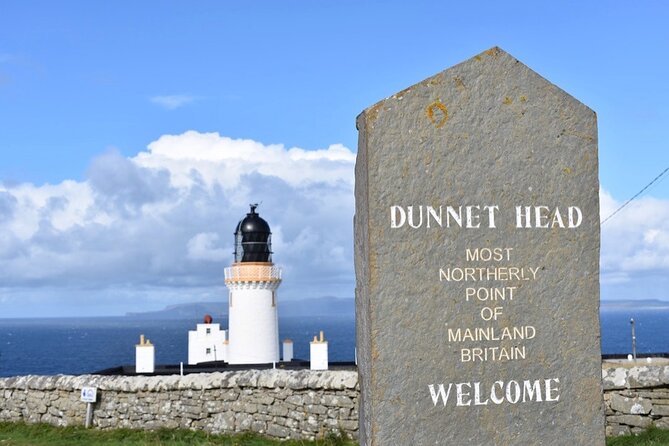
This is the kind of Scotland trip that makes sense when you want maximum “edge of the world” without renting a car and building a plan. You start in Inverness, then work your way toward the far north and northeast coast, with a sequence of cliff viewpoints and coastal towns that each feel like a different chapter.
The good news is that many stops are short and free, so you’re not paying every time you stop for photos or a quick walk. The included snacks and bottled water help too, because in this region you can lose momentum if you’re hungry and there is no time for long meals.
The main tradeoff is distance. Even with efficient routing, you’re signing up for a full day, roughly 7 to 11 hours, with lots of windows-on-views moments. If you hate long car stretches or want a slow, deep-dive pace, you might feel the pressure. If you like variety and quick hits, this tour fits beautifully.
More long days up the glen roads:
- Inverness: Loch Ness & The Highlands★ 5.0 · 301 reviews
- Inverness: 2-Day Isle of Skye, The Fairy Pools & Highland Castles★ 5.0 · 225 reviews
- Inverness Highlands Bucket List Tour★ 5.0 · 111 reviews
- From Inverness: Cawdor Castle, Cairngorms and Highland Coos★ 5.0 · 86 reviews
John O’Groats: the signpost photo, coastal history, and wildlife odds
John O’Groats sits on the north-eastern tip of mainland Britain, and that alone makes it feel like a finish line even if it’s your starting point. The village is famous as the end of the Land’s End to John O’Groats route, so you’ll see plenty of visitors making their photo at the signpost.
What I like here is the combination of easy access and real atmosphere. You don’t need a big hiking plan to enjoy it. You also get those broad coastal views across the Pentland Firth, with the Orkney Islands sometimes visible when the weather cooperates.
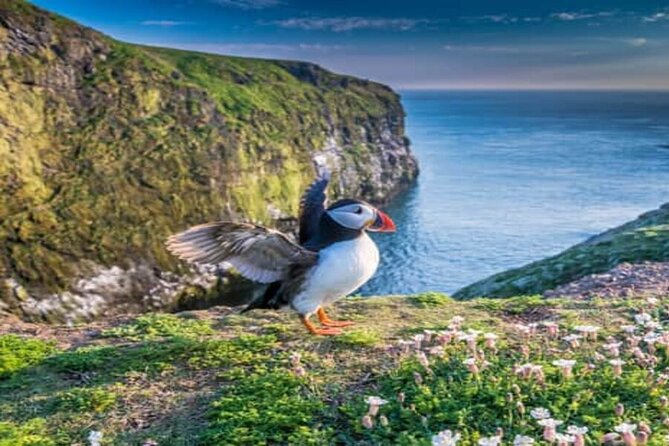
Wildlife is part of the draw. Puffins, seals, and even whales have been spotted here, but depending on the season, you should treat that as a possibility, not a promise. The best approach is simple: bring binoculars if you have them, and be ready to pause even if you feel you’ve already taken the classic photo.
A practical note: the time for this stop is about 1 hour, which is enough to grab the signpost photos, walk the immediate area, and still feel un-rushed. If your timing is tight, focus on the clifftop viewpoints and the harbor-side views where you can see birds moving.
Duncansby Stacks and Duncansby Head: where the North Sea makes the rules
Right after John O’Groats, you’re sent to one of the most dramatic stretches of coastline in the area. The Duncansby Stacks are towering sea stacks rising straight from the sea, sculpted by wind and waves over centuries. Even if you’re not a rock-formation person, the shapes feel otherworldly in the way they jut upward like giant teeth.
The walk to see the stacks is short, but it’s one of those walks where the reward keeps changing as you move. Seabirds tend to gather here, including puffins, guillemots, and kittiwakes. Again, it depends on the day, but this is one of the places where you’ll have the highest chances of spotting birds in the wider route.
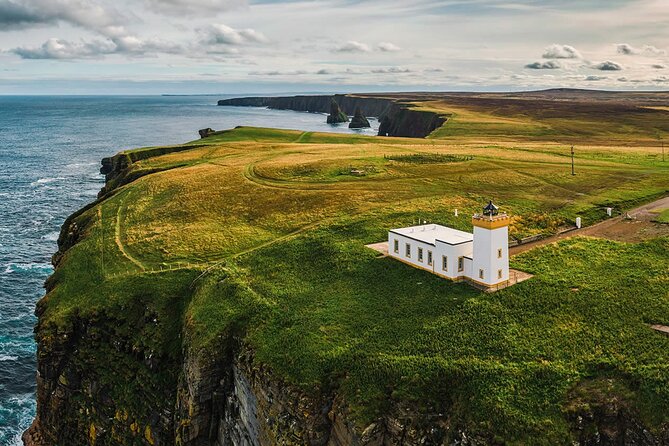
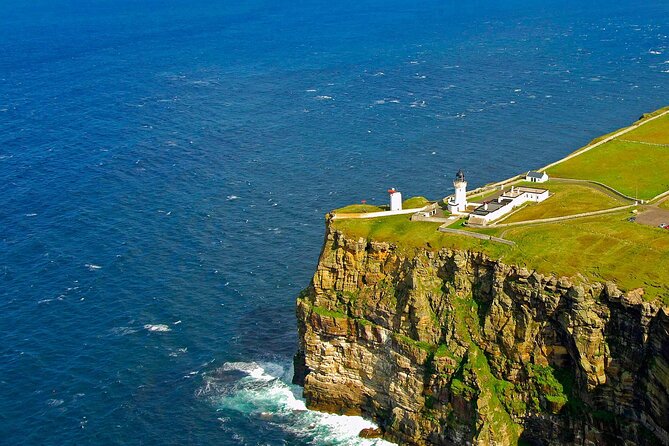
Then you move to Duncansby Head, with a lighthouse built in 1924 by David Alan Stevenson from the famous Stevenson lighthouse-engineer family. The lighthouse itself isn’t open to the public, but getting to the viewpoint is part of the experience. You drive through open moorland before the cliffs and North Sea show up, and that build-up matters. It turns the scenery from something you pass into something you arrive at.
Time here is about 20 to 30 minutes across the two stops, depending on how the pacing works. In practice, that’s enough for photos plus a brief look for wildlife, but not enough for a long wander if you get caught in bird-watching mode. If you’re a wildlife-first traveler, prioritize your best viewpoint early, then you can relax.
Wick in Caithness: fishing-port bones, maritime views, and whisky time
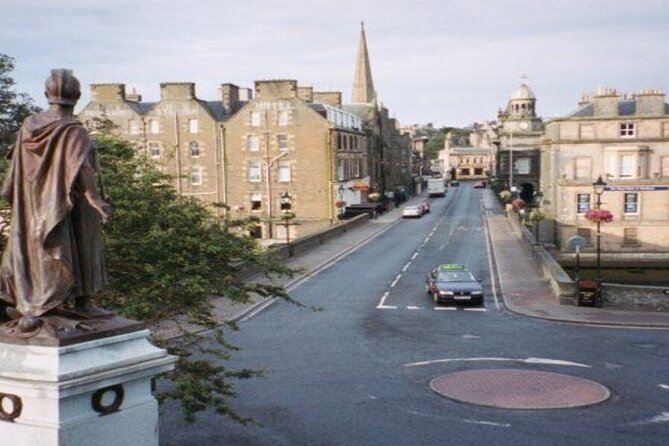
Wick is a former Viking settlement and far-north coastal town in Caithness, strongly tied to its maritime past. In the 19th century, it was one of Europe’s busiest herring fishing ports, and you can still feel that working-port identity around the harbor.
I like Wick because it breaks up the constant cliff viewing. You get to slow down and look at town edges, harbor structures, and the everyday face of the far north. It also adds variety to the day, since earlier stops feel like pure coastline and wind.
There’s time here for an easy explore and a couple of “quick wins.” If whisky is your thing, Wick is home to the Old Pulteney Whisky Distillery. The town is also known for a Guinness world record for having the shortest street in the world, which is the kind of fun detail that takes almost no time but adds personality to your day.
This stop is about 1 hour, which works well. You’ll have time to walk a few blocks, check the harbor area, and still be ready for the next leg.
What Inverness keeps behind the bar
- Inverness: The Isle of Skye and Eilean Donan Castle
★ 5.0 · 2,039 reviews - Loch Ness Cruise, Outlander & Urquhart Castle Tour from Inverness
★ 5.0 · 1,384 reviews - Loch Ness and Caledonian Canal 2-Hour Cruise from Dochgarroch
★ 4.5 · 1,158 reviews - The Ultimate Isle of Skye Day Tour from Inverness
★ 5.0 · 1,135 reviews
Whaligoe Steps and Dunnet Head: the stairway to a hidden harbor feeling
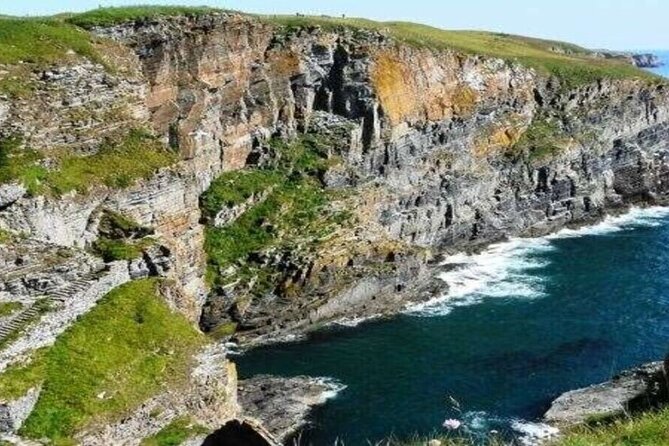
After Wick, you switch to something more physical and more unique. Whaligoe Steps are the kind of place that looks small on maps, then surprises you in real life. It is a stone staircase of around 365 steps descending from cliff to a historic harbor.
You do not need to descend all the steps to enjoy it. If you have mobility concerns, you can view the steps and area from above. That matters because it’s not a flat, easy walk, and the value here is in the dramatic scale.
Historically, the steps were built in the 17th to 18th century to give access to a small fishing port. The local women hauled heavy herring baskets up and down those steps, which makes the experience feel grounded and human, not just scenic.
You’re there for about 45 minutes, and that’s plenty for photos, viewpoint time, and a short look at the area. Wildlife can show up, with seabirds, seals, whales, and even dolphins reported at times, but as always, treat it as seasonal possibility.
Then comes Dunnet Head, a headland that is the northernmost point of mainland Britain. The views over the Pentland Firth can be excellent on clear days, and you might even see the Orkney Islands from here.
Dunnet Head has its own lighthouse, built in 1831 by Robert Stevenson. Like many lighthouse areas, the real appeal is the wide cliff panorama and birdlife. Puffins, razorbills, guillemots, and kittiwakes are associated with the nesting cliffs, which makes this stop feel like a nature checkpoint.
Time is about 20 minutes. It is short, so aim to arrive ready to look. This is the part of the day where fast weather changes can shift everything, so quick timing helps.
Choosing your castle: Dunrobin Castle vs Castle of Mey
This is where the tour can feel different depending on the day.
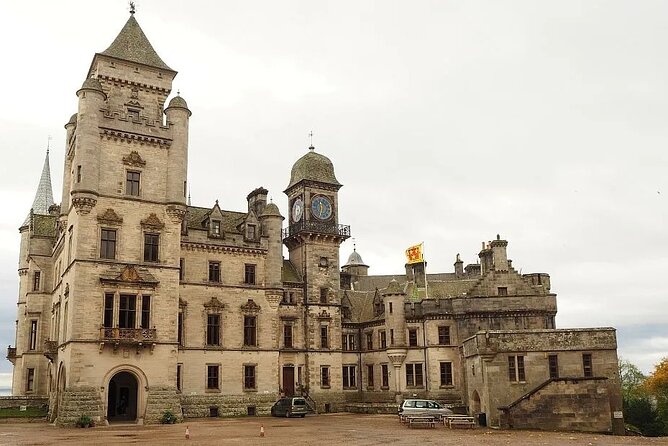
If the tour departs from Inverness, you have the chance to visit Dunrobin Castle and Gardens, a stately home in Sutherland and home seat of the Earl of Sutherland and Chief of Clan Sutherland. The interior décor is described as outstanding, and the museum portion includes a collection of trophy heads from safari hunts done by family members, plus ethnographic items from around the world and archaeological artefacts. The museum keeps a Victorian-Edwardian arrangement and sits in an 18th-century summerhouse next to the formal gardens.
This castle visit is about 1 hour, and castle admission is not included. If you want to see interiors, factor this extra cost into your budget.
If instead your tour departs from Scrabster, you may visit The Castle & Gardens of Mey. This estate on the northern coast has a strong royal connection. It was built in the 16th century, then saved from ruin and restored in 1952 by Queen Elizabeth, The Queen Mother, who used it as a holiday retreat for nearly 50 years. The setting is coastal, and the interiors and gardens give the day a more domestic, sheltered contrast to open cliffs.
But timing matters. Castle of Mey is only visited when the tour departs from Scrabster, and it runs Open May to September, Wednesday to Sundays. On closed days, a replacement stop is added.
So the practical advice is simple: if castle interiors are a must for you, decide whether you care more about Dunrobin Castle or Castle of Mey, then book with your dates in mind.
How the private guide and Tony-led pacing change the day
A big part of why people rate this tour highly is the guide experience. In the best case, you get a local host like Tony, who brings a well-planned day and also adjusts based on what your group wants to see. That means you can spend more time on viewpoints that click for you, and less time on stuff that doesn’t.
You can also tell when a guide is proud of the region. The commentary tends to connect the stops into one story of coastal life, lighthouses, fishing, and settlement. That kind of context is what makes the day feel more than just driving from photo spot to photo spot.
Even the vehicle support matters. You get a comfortable, air-conditioned vehicle, and with such long distances, that can be the difference between a tour you enjoy and one you survive. Bottled water, snacks, and umbrellas are small inclusions, but in the north where weather shifts fast, they make the day feel cared for.
Price and value: what your money is really buying
The price is listed as $1,018.25 per group up to 4. That means your real cost per person depends on how full your group is.
- If you book for 4 people, the shared cost works out to about $254.56 per person.
- If you book for fewer people, the per-person cost rises fast, because this is private transportation rather than a shared bus.
So the value question comes down to your travel style. This tour is a good deal if you’re splitting the vehicle cost with others, or if you hate the stress of self-driving on remote roads and building timing between far-north stops. It also makes sense if you want a guide to explain why each place matters, not just where it is.
What you should budget beyond the tour price is mainly:
- Castle admissions for Dunrobin or Castle of Mey, listed as £15 to £17
- Lunch is not included
Many coastline and viewpoint stops have free admission, so you’re not constantly paying entrance fees. That helps keep the overall day from turning into an expensive checklist.
Timing, weather, and what to pack for these cliff stops
This is a coast-heavy day, meaning you’re at the mercy of wind and changing light. The good sign is that the tour includes umbrellas, plus water and snacks, which makes you less dependent on finding supplies in tiny towns.
Still, you should pack like you’re going to a lighthouse-and-cliffs day, not a city museum day. Bring layers, something wind-resistant, and shoes that handle uneven ground if you want to walk viewpoints.
Wildlife adds another layer of planning reality. Puffins, seals, whales, and other sightings are exciting, but they’re not guaranteed. If you take the pressure off yourself and treat every short stop as a chance, you’ll likely enjoy the day more.
Also remember that some stops are short by design, so if you’re the type who likes to linger, build a bit of flexibility into your mindset. The structure helps you see more of the coast, but it also limits slow wandering.
Who this tour is for, and who should pick something else
This works especially well for:
- Couples or small groups who want a private far-north day from Inverness
- People who love coastline viewpoints and lighthouses and want a guide to connect it all
- Travelers who want minimal planning and a comfortable ride for a long day
You might prefer a different style of trip if:
- You want a slower pace with lots of walking time at every stop
- You strongly need one specific castle interior on a specific date and don’t want variability in what is visited
Because the tour has options for Dunrobin Castle or Castle of Mey depending on departure and calendar, dates and priorities matter.
Should you book it?
Yes, if your goal is a high-views, far-north day with a local guide, quick photo-and-wildlife stops, and the comfort of private transport. The strongest reason to book is the balance: you get famous coastal points like John O’Groats and Duncansby Stacks, plus quieter but memorable moments like Whaligoe Steps and Dunnet Head.
Just book with open eyes about two things. First, it’s a full day with significant driving, so it rewards people who like variety. Second, castle time depends on timing and departure point, and admission is extra, so check your dates if castle interiors are a priority.
If you match those expectations, this is one of the more efficient ways to feel the edge of mainland Britain in a single day.
FAQ
What time does the tour start?
The tour starts at 9:00 am.
How long does the Top Of The Highlands tour take?
The duration is about 7 to 11 hours.
Is pickup offered, and where do we meet?
Pickup is offered. You’ll meet with a name board for your group, and the tour ends back at the meeting point.
Is this a private tour?
Yes. It is private, and only your group participates, up to 4 people.
What’s included in the tour price?
Included items are bottled water, snacks, an air-conditioned vehicle, private transportation, a local guide, and umbrellas.
Are castle admissions included?
No. Castle admissions are not included and are listed as £15 to £17.
Is lunch included?
No. Lunch is not included.
Will I see wildlife like puffins or seals?
You might spot wildlife such as puffins and seals, but sightings depend on the season and are not guaranteed.
Are there any options if I cannot do lots of steps?
Most travelers can participate. For Whaligoe Steps, there is an option to view from above if descending the steps is not suitable for you.
The newest pours out of Inverness

Scottish Highlands Day Tours, compared.
Loch Ness, Scottish Highlands, Glencoe and Pitlochry Tour
Read our review →
Loch Ness & Highlands Small-Group Tour from Edinburgh with Cruise
Read our review →
1 Day Loch Ness, Glen Coe & the Scottish Highlands from Edinburgh
Read our review →
Scottish Highlands, Loch Ness and Glencoe Day Trip from Edinburgh
Read our review →
Loch Ness, Glencoe & the Highlands Guided Day Tour from Edinburgh
Read our review →
Loch Ness and the Scottish Highlands Day Tour from Edinburgh
Read our review →Browse the lists this tour appears in